
You are already
paying for risk.
Every year, every business owner writes the checks. Most send them to a stranger. A few send them to a company they own. That is the whole difference between insurance you rent and insurance you build.

Keep what you are already paying for risk.
A two-minute fit check, the plain-English guide, and a look at exactly how the process runs.
Start here
Bring your clients the one idea nobody else has.
Free certification taught by the founder, a process you can see, and a promise we put in writing: your client stays yours.
The advisor trackHere is the simple idea.
Big companies figured this out a long time ago. Nearly every one of them owns its own insurance company.
Not because they are clever. Because they got tired of paying for risk that never showed up and never seeing a dollar of it again. A captive is that same discipline, sized for a business like yours.
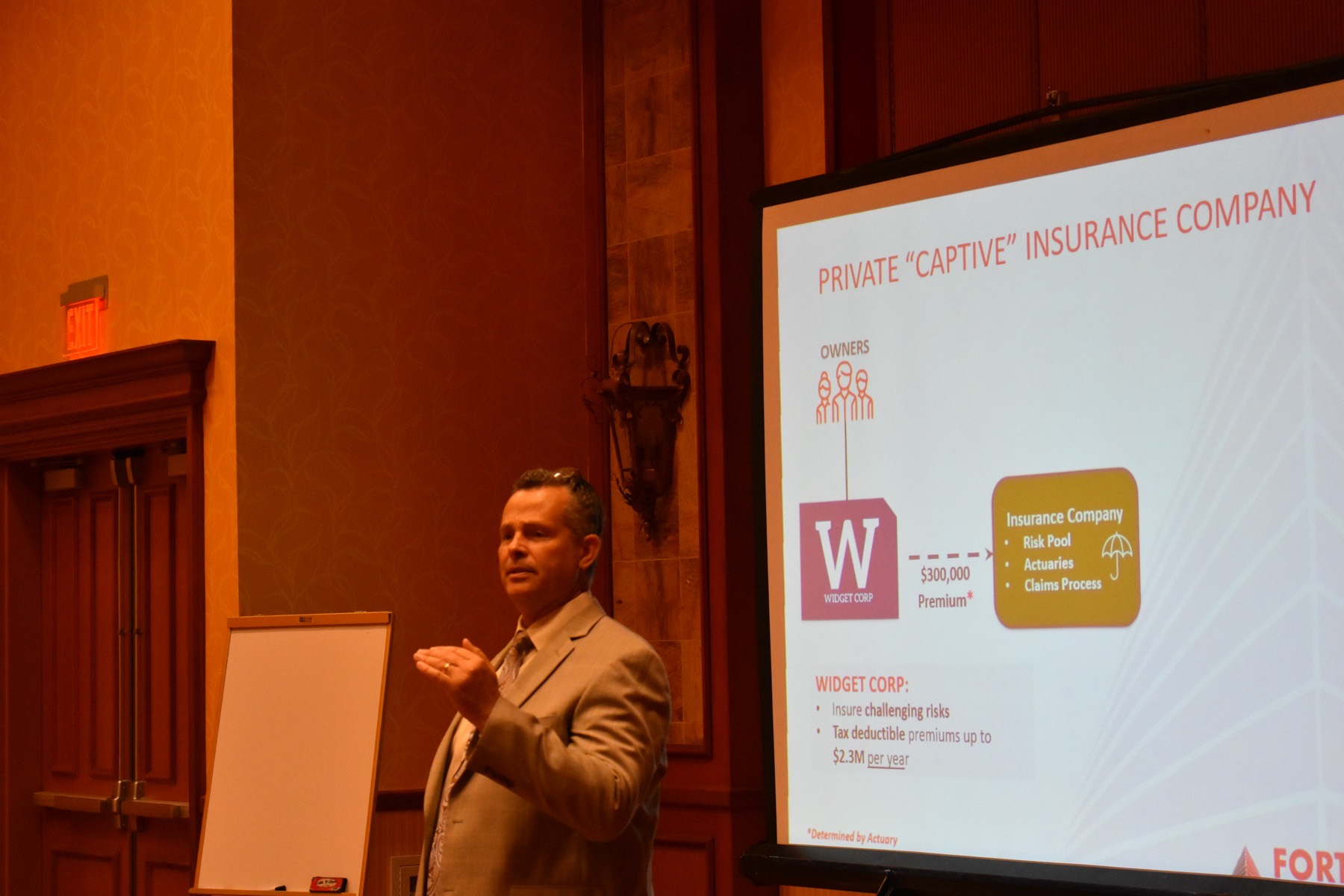
You keep your commercial coverage. You add your own insurer for the risks the market will not cover well. Credentialed actuaries set the premiums. A licensed insurance manager runs the claims. What is not consumed by claims stays in a company with your name on the door.
- Business interruption
- Loss of a key customer
- Loss of a key employee
- Supply chain interruption
- Cyber risk and data breach
- Warranties, express and implied
- Deductibles and policy exclusions
- Litigation defense
- Employment practices
- Products liability
- Brand and reputation
- Regulatory risk
An insurance company you own.
A captive is an insurance company formed to insure the risks of your own business, alongside the commercial coverage you keep.
The name comes from the steel industry. In 1953, Fred Reiss formed an insurer for Youngstown Sheet & Tube Company in Ohio and borrowed the word from the steel company’s “captive” mines, which sent their ore only to its own mills. Today nearly every company in the Fortune 500 owns at least one.
For a business your size, credentialed actuaries price it, a licensed insurance manager runs it, and it is regulated like any insurer. Premiums not consumed by claims stay in a company that belongs to you.
- A tax strategy with an insurance company painted on it
- A replacement for your commercial coverage
- A way to set your own premiums or move them to suit your income
- A shortcut around the actuaries, the claims process or the annual filings
- Right for every business, and we say so on the first call
Built course by course, like a wall.
Forming a captive is a sequence, not a mystery. Three phases, every step named, every step with a date and a name next to it.
Most of the people who do this work keep the process behind a curtain. We put it on the page, and once you are a client, we put it on a board you can open any time.
- 01
Assess
A discovery call, your documents, and a study by credentialed actuaries of the risks you carry. You decide with real numbers in hand.
- 02
Form
The company is formed, licensed, and capitalized. Elections are filed. Accounts are opened. Two to four weeks, typically.
- 03
Insure
The first policy is issued and the first premium is paid. Your captive is in business.
- 04
Manage
Quarterly statements, claims, the annual actuarial update, the return and the election. Handled, on a calendar you can see.

Two attorneys who met in the back row.
In 2012, at a conference session on captive insurance, two estate‑planning attorneys sat down next to each other. One leaned toward tax and accounting. The other toward financial planning and investments. By the next spring they had a firm, and it had one job: make a heavy financial tool feel simple for the owners of small and midsize businesses.
We are business owners too. We have used captives in our own ventures. And we still teach this ourselves, in the room, to the advisors and owners who want to understand it before they trust it.
Find out if a captive is right for your business.
Two minutes. Nine questions. No sales pitch. You get a plain reading and, if it makes sense, a conversation.